Tuesday, 19 March 2013

Retail in Education Update

 Over the last few months, Resource for Life has been delivering the Retail in Education qualification in conjunction with Castlebrae Community High School and Fort Kinnaird with funding from British Land. As the end of the spring term approaches, we would like to update you on our progress.

We are delighted to report that it has been a very successful year for all 7 of our fourth year students, each of whom is expected to gain their full SQA award for Retail in Education. This week marks the final week of lessons and placements for the fourth years before they leave for the Easter break and then exam leave.
 
As part of their retail course, the fourth years planned and hosted an event for their first year counterparts that took place at the school on the 15th of March. The event allowed students to draw on knowledge, skills and experience they have gained from the Retail in Education course. This year’s event was given an Easter theme and involved a raffle, Easter egg hunt and games in conjunction with the school’s Sports Leader students. The money made from sale of raffle tickets amounted to £100.55 which contributed to other school efforts all in aid of Comic Relief. 

Resource for Life would like to congratulate the fourth years on their successful completion of the retail course and wish them all the best for the future.
 
Likewise, it has been a successful year for our third year students who are all on course to complete two of the four retail units. After the Easter break, third years will continue with theory lessons and placements at Fort Kinnaird. Placements have been an integral part of their qualification whilst providing essential work experience and helping to build confidence.

Placements have been taking place with various retailers across Fort Kinnaird including Trespass, Hobbycraft, Thorntons and Toys R Us. Students have been enthusiastic about the practical nature of their placements, enjoying the busy working environment that retail offers. Many students felt that they were developing both personal and employability skills. It is also evident that students developed positive relationships with the retailers and staff they were working alongside. 

Resource for Life would like to thank Fort Kinnaird and the retailers for their continued support and cooperation.

Friday, 8 February 2013

Invitation to the final OCTES Regional Workshop


The final workshop in the OCTES Regional Workshop Series will take place in Stornoway, Isle of Lewis, on 20thFebruary 2013.

OCTES is a multidisciplinary project looking at the impact of energy pricing for the domestic consumer in rural and remote communities, funded by EU Northern Periphery programme, 2011-2013.

Throughout the duration of the project, OCTES has has hosted a series of regional workshops in the OCTES partner regions, Finland, Iceland, Northern Ireland and Scotland, which have attracted a wide range of stakeholders and guest speakers.

The final workshop will take place at An Lanntair, Stornoway, on 20th February 2013. It will review the findings of the project and look at local community energy policy and innovations in community renewable energy. To compliment, there will be community speakers to voice the consumer experience of the OCTES project and an insight into the OCTES advisory service from Energy Savings Trust.

Guest speakers include Scottish Government, Energy Savings Trust, Community Energy Scotland, and Highlands and Islands Enterprise.


To book a place for this free event, please contact amy.clarke@irri.org.uk.


Thursday, 7 February 2013

Resource for Life races into its second year!


Friends of Resource for Life,

Thanks to your generosity and support, Resource for Life is now running as a programme in Edinburgh.  This is our first report to let you know what we are doing and how your money has been and is being spent, exactly one year after its launch in 2012.

Thanks to kind donations to the Runner Bean Team, and funding from The Robertson Trust and Nairn’s, many children attending Castleview Primary School and Granton Primary School benefited from the first year of Resource for Life, learning the life skills necessary to help them access the resources they need for their lives from their local environments. The children have learnt how to grow their own food using low cost urban gardening techniques, how to recycle and reuse household materials to create useful items, how to use local water resources efficiently, how to harness local energy, and how to save energy in the home.

Following a successful first year of the programme, further funding from The Robertson Trust, Bank of Scotland Foundation, our own John Moorhouse, Nairn’s (thanks to Mark Laing), and The Scottish Community Foundation (thanks to the Nairn’s charity walking team) has allowed the Resource for Life programme to be delivered for a second year. The programme has expanded into three schools, reaching out to even more children than last year. In addition to Castleview Primary School and Granton Primary School, Resource for Life is also now working with Murrayburn Primary School.

The second year of Resource for Life launched two weeks ago, as our Resource for Life Leaders worked with this year’s classes to create a colourful Resource for Life display board, using recycled materials and their imaginations. Over the next few months, the classes will learn how to make the most of local resources, including learning how to grow salad in a newspaper, make natural, low-cost cleaning products, get crafty with recycled tights, make a DIY watering can, and harness local energy.

Last but certainly not least, we would like to thank British Land and their continued support for the Retail in Education SQA, which is now being delivered as part of the Resource for Life programme.  This involves students from Castlebrae High School to whom retail tenants in Fort Kinnaird offer weekly placements in a variety of stores.  The students continue to enjoy and learn from their on-site experience, helping them to achieve an SQA Intermediate 2 qualification in Retail.  Both students and the retailers consistently give excellent feedback about the programme.

Thanks again for your support and generosity. We look forward to sharing the resourceful learning of the pupils and continued success with you over the coming months.

The Resource for Life Team

Monday, 12 November 2012

IRRI presents at International Water Conference


Last month, IRRI attended the final SHARP project partners meeting and second International SHARP Conference, in Graz, Austria.

During the final meeting, October 9th 2012, SHARP partners discussed the completion of the SHARP Manual, which will be published shortly after the end of the project. Watch this space!

Following the final meeting, international visitors joined the SHARP partners for the 2nd International SHARP Conference, on October 10th 2012. More than 70 delegates travelled from across Europe to hear presentations on groundwater recharge from SHARP project partners. Following the presentations, discussions took place between project partners, external experts and delegates. 


Above: International Resources and Recycling Institute presents topic 'How to engage with key Stakeholders'.

Please click here to view the latest SHARP Project newsletter.


Friday, 9 November 2012

IRRI Green Infrastructure work wins award!

IRRI is delighted to announce that it is part of the winning team for the Integrated Habitats Design Competition 2012. The study, titled 'Nitshill Integrated Green Infrastructure Design Study' won the award for Overall Winner 2012, working with Glasgow & Clyde Valley Green Network, Glasgow Ciy Council, ERZ Limited and Glasgow EnviroCentre.

As announced by the IHDC awarders, 'the focus for the Nitshill Integrated Green Infrastructure (IGI) design study is a suburban area of approximately 300ha in south west Glasgow. The aim of the study is to identify and provide design proposals for strategic opportunities to enhance and expand the area’s existing green infrastructure and integrate it into existing and new built development for the area.


'The study objectives are to:
• improve the quality of life for those who live and work in, or visit Nitshill
• provide more robust habitats for wildlife integrated through the built environment
• deliver naturalised surface water management solutions
• better prepare Nitshill for the impacts of climate change.

'The study approach was to consider where delivery of green infrastructure could most effectively and efficiently deliver the following five design elements:
• surface water management
• habitat networks
• access networks
• green and open space
• cost‐effective stewardship over time.

'The analysis brought together many spatial datasets, including integrated habitat network models for woodland, wetland and grassland habitats. From the analysis area specific design studies have been developed which are imaginative and innovative and deliver on the study objectives. The study has been well received by Scottish Government, local planners, agencies and local communitie and it will influence an ‘Area Development Framework’. The Council and other agencies are working to deliver ‘early wins’ based on the proposals, which can help them deliver services more efficiently.'

Judges of the competition gave brilliant praise to the study: 'Looking at a variety of aspects, this is a comprehensive and convincing project. Integration comes in the form of impressive community links and a great approach to ecological networks. The submission included a thorough GIS analysis and a sustainable drainage system presented in detail to address surface water flood risk and management. The judges were impressed by the in-depth analysis of this realistic and cost-effective project.'

To view images of the project, please visit: http://ihdc.org.uk/#/nitshill-gi-study/4570104722

A perspective on rural Malawi


I am sitting in Addis Ababa airport late on a Friday night with nothing much else to do for the next few hours so I thought I would use some of my time efficiently and let you know my thoughts on my visit to Malawi which will hopefully provide a wider context and perspective on the kiosk project going forward.

Malawi

The trip has really opened my eyes to the challenges the communities (and RENAMA) face in a country such as Malawi. I suppose up until now I occasionally got frustrated during the running of the project when I expect things “just to happen” like they do here in the UK, and have often wondered when things haven’t happened as we would have liked, which was very unfair of me. What I can say without a shred of doubt is that Maxi and RENAMA are doing an amazing job in the circumstances they face.

Malawi
I don’t think you can get a true sense of the challenges that anyone faces in Malawi until you experience it first hand. All of the things I have experienced should not really have come as a surprise (and they didn’t to be fair) but the true scale of the problems are really hard to comprehend until you face it first hand.

The poverty I saw is beyond anything I have ever seen before, kids at school with no shoes, some without any uniforms, the school with barely any windows, barely any chairs or desks, 18 teachers to teach 1,200 kids!

You wouldn’t have thought that though when you arrived outside the school to meet hundreds of the most smiling, happy and cheery children I have ever seen in my life (you certainly wouldn’t see kids having fun like this in a school in the UK, as they would be too preoccupied with their phones, iPod’s etc).
Malawi
No roads in the village that we would recognise as roads, families surviving on 10,000 kwachas (£20) per month, no lights (other than unhealthy and expensive paraffin lamps or charcoal wood) in the houses or the community which affects reading and writing for the children as when it gets dark they can’t see a thing and it is a security risk, not to mention a health hazard and an economic hardship. Thursday was a perfect example of how Malawi works (or doesn’t work!!). Left Blantyre to go to Lilongwe which should take 5 hours. We had a government official in the car with us as well!! Car broke down in the middle of nowhere for 4 hours, so the journey took 10 hours in total!!!. Anyway, the problems are cars are second hand, at best and when they break down it is a nightmare trying to find someone / something to fix it. Also, the country essentially ran out of petrol, diesel a few weeks back and regularly petrol stations are empty which poses another problem. The outcome of this break down was that the phone calls I was meant to do re the container and the freight company couldn’t happen as for the 4 hours we were stuck it was in an area with zero mobile phone reception, so all these calls needed to be done on Friday morning further delaying things. Even the process of printing of your boarding passes to go home (a simple task you would have thought?!) Well, printers seem to be broken everywhere in Malawi – hotels, lodges, offices, airports etc! That was yet another challenge! All in a day’s work in Malawi!
The village people think nothing of getting up at 5am to walk 3 hours into town to work and walk another 3 hours home along the side of the roads in the pitch black. They have no cars, no bikes so they don’t have a choice, otherwise they can’t find work and in many cases there is no work to find. Instances of people being hit by cars are very regular.
Nutritionally, you can see that lots of the kids have bloated tummies, and are most definitely not in the best of health. There is some knowledge of nutrition and health and hygiene although maybe not as much as you would have imagined in some villages although more advanced in others. Nsima is the staple diet in the villages, which the villagers eat breakfast, lunch and dinner.

There is a missing generation – I don’t think I met anyone in a village who was aged between 50 and 65 as this age group have all died of aids or other diseases. Orphans run the streets looking for scraps of food, clothes and so on.

Malawi
RENAMA is doing a monumental job in the circumstances although they too face challenges that we wouldn’t face over here. Inflation is running at 25%, power cuts happen 2 or 3 times a day. Printers break down, cell phone coverage is patchy, phone’s run out of charge and then can’t be recharged for a while, the computer equipment they have is old and breaks down, people don’t turn up to meetings etc. Maxi’s staff are great but they have huge limitations too, partly down to lack of experience but also due to the way things are done. A perfect example was on Thursday morning when Maxi, Thomson and I were about to sit down and go over budgets and reporting schedules, when the power went out. Within an hour all the computers had run out of power, phones were losing charge and generally it became challenging to do the work that was needed to be done. In this instance we were able to do it all because we had my laptop but in normal circumstances this wouldn’t have been possible. Maxi is under immense pressure but is doing a more than admirable job and should we decide setting up IRRI Malawi is the way forward I would have no hesitation in getting her to help set things up for us.
Everything takes so long in Malawi. Every community meeting is preceded by a set of prayers and everyone in the room goes around introducing themselves, followed by a speech by each and every village leader. This takes a long time, but we must respect that this is a very important part of Malawian culture, and if it isn’t done, then the chances of the community buying into what we are trying to do is nil. Custom is a big part of life over here and any NGO’s who are trying to help  must accept that things are done in a certain way, whilst trying to help change and overcome some of the pressing challenges that everyone faces.

Malawi
The economy is goosed in a big way. The new president is taking austerity to a level which would make George Osborne proud, but link that with the rate of inflation and people just can’t afford the basics of life. The currency devaluation is taking its toll, with the exchange rate to the GBP rising on a daily basis, with prices rising accordingly. Financial incompetence is rife, receipts aren’t give out as standard when buying equipment, being offered “a cheaper rate” if you don’t take a receipt etc etc. I should stress that Maxi and Thomson are both extremely diligent when it comes to accounting for expenditure which is great. All expenditure is scanned with receipts in the drop box and is all accounted for at this side of the project.

Just when you start to question, “Why are we trying to do what we are trying to do in Malawi, is it worth it ...", "can we really make a difference given all of the challenges?”, you meet hundreds of smiling kids who look like the happiest kids I have ever met, yet they have nothing, absolutely nothing. The community leaders and members are so grateful for any help we are able to provide, and welcome you into their homes like you are royalty (made me very humble and embarrassed in a way, given the fact that their resources are so scarce.). They were pleading with us to get the kiosks up and running as quickly as possible as this would make a tangible difference to their lives as families and as a community.

These pictures are also available on Flickr.

Tuesday, 17 July 2012

Electrifying Rural Malawi!

In April 2012, the Scottish Government announced IRRI's most recent partnership project, 'Rural Off-Grid Energy Kiosks', to be one of the winning projects funded by the Scottish Government Malawi Development Programme 2012/ 2013. 

IRRI is thrilled to be lead partner in such an innovative project, and looks forward to working with Scottish partner, David Livingstone Centre for Sustainability, and Malawian partners Renew'N'Able, Concern Universal Malawi, Eqnon, Leadership for Environment and Development Southern and Eastern Africa (LEAD SEA), WASHted, and Airtel Malawi. Drawing on the experience and strengths of the different partner organisations, the project promises to make a real positive impact on the lives of many communities living in rural Malawi.

At present, only 8% of the population in Malawi has access to electricity, mainly in urban centres. In rural Malawi, where the majority of the Malawian population lives, less than 1% of the population has access to electricity. Non-electrified communities rely on paraffin, which aside from being damaging to health, is becoming scarcer in rural areas and prices are ever increasing. The main aim of the Rural Off-Grid Energy Kiosks project is to contribute an innovative and viable off-grid community electrification solution which has real potential to increase rural Malawian's socio-economic opportunities.

The Rural Off-Grid Energy Kiosk project will install solar powered energy kiosks in rural Malawi, allowing households to buy and charge up batteries for their domestic use, therefore reducing their dependency on increasingly expensive paraffin and improving their access to efficient lighting, communication, and information. Since project kick-off in April, the first steps have been taken and we hope to be lighting up the homes of many communities living in rural Malawi over the coming months!


Thursday, 5 July 2012

A successful year for Resource for Life

Last week saw the concluding session of the Resource for Life programme, as our primary schools rounded off a successful school year and packed up for the summer holidays.

Since the idea was born in Autumn 2011, the Resource for Life programme has developed in leaps and bounds, thanks to funding from the Robertson Trust, a donation from Nairns, and funds raised by the Runner Bean Team from the Great Winter Run.

Throughout the first year of the programme, 60 children have benefited from Resource for Life, learning the life skills necessary to help them access the resources they need for their lives from their local environments. The children have learnt how to grow their own food using low cost urban gardening techniques, how to recycle and reuse household materials to create useful items, how to use local water resources efficiently, how to harness local energy, and how to save energy in the home.

To recap and document the activities and achievements of Resource for Life 2012, we teamed up with London based children's arts charity, House of Fairytales, which is working with local schools and community groups to produce a journal which will be distributed in the Edinburgh Art Festival. This was a wonderful opportunity for the Resource for Life classes to showcase their learning, as they reported their food growing and designed advertisements for their DIY natural household cleaning products.

Aside from achieving encouraging learning outcomes, both children and facilitators thoroughly enjoyed participating in Resource for Life. Over the summer, we plan to learn from our experiences gained over the past year and develop Resource for Life, ready to make a comeback in the upcoming academic year, 2012/ 2013. If you're part of, or know a school that would like to discuss working with Resource for Life, please contact us at amy.clarke@irri.org.uk or 0131 202 1649.

For now, happy holidays everyone!


Monday, 25 June 2012

Many thanks, from the Runner Beans!


To all who kindly supported Resource for Life,

Thanks to your generosity and support of the Runner Bean Team, the Resource for Life programme has now been delivered in two schools in areas of deprivation in Edinburgh, with excellent results.  We have taught the children a host of new skills through four Resource for Life modules: Food, Recycling, Water, and Energy.  A recent evaluation of the first phase of the programme showed that both pupils and teachers appreciate and enjoy the course; more than that, they believe it provides a value that no other course can offer.

We now aim to expand Resource for Life into more schools in areas of deprivation in Scotland, and further field.  We believe the help offered by Resource for Life should be open to all who live in areas of deprivation.

Your kind donation has helped to pay for the development and delivery of this unique course.

Thanks for your support!

Tuesday, 6 March 2012

SMALLEST road show series Kicks off

IRRI is currently preparing for the final SMALLEST project partner meeting which will be held at the end of March 2012 in Aviemore, Scotland. The meeting will be followed by the first in a series of events focused on developing renewable energy policy across the Northern Periphery of Europe.

The road show series kicks off at the Scottish Holyrood parliament, in Edinburgh at the end of March 2012, followed by events in Eastern Iceland, Northern Ireland and Northern Sweden.

In April a two day event is planned in northern Sweden. The event will contain presentations, workshops, participatory events and site visits and has been organised through collaboration between North Karelia University of Applied Sciences in Finland and the Municipality of Norsjö in Sweden.

In Northern Ireland, Action Renewables and the Ulster Business School at the University of Ulster are teaming up to hold an event at Parliament Buildings, Stormont, Belfast, on Tuesday 8 May, 2012. Members of the Enterprise Trade and Investment Committee of the Northern Ireland Assembly, who are responsible for renewable energy issues in Northern Ireland will be presenting at the event, amongst others.

The SMALLEST partners are looking forward to the road show series and hope that these events will assist in developing community renewable energy across the Northern Periphery region beyond 2012.  

The SMALLEST project was set up to make renewable energy more accessible to the smallest communicates in the most isolated areas of Northern Europe. To find out more about SMALLEST, please visit: http://www.smallestnpp.eu/.

Friday, 9 December 2011

Resource for Life Appeal


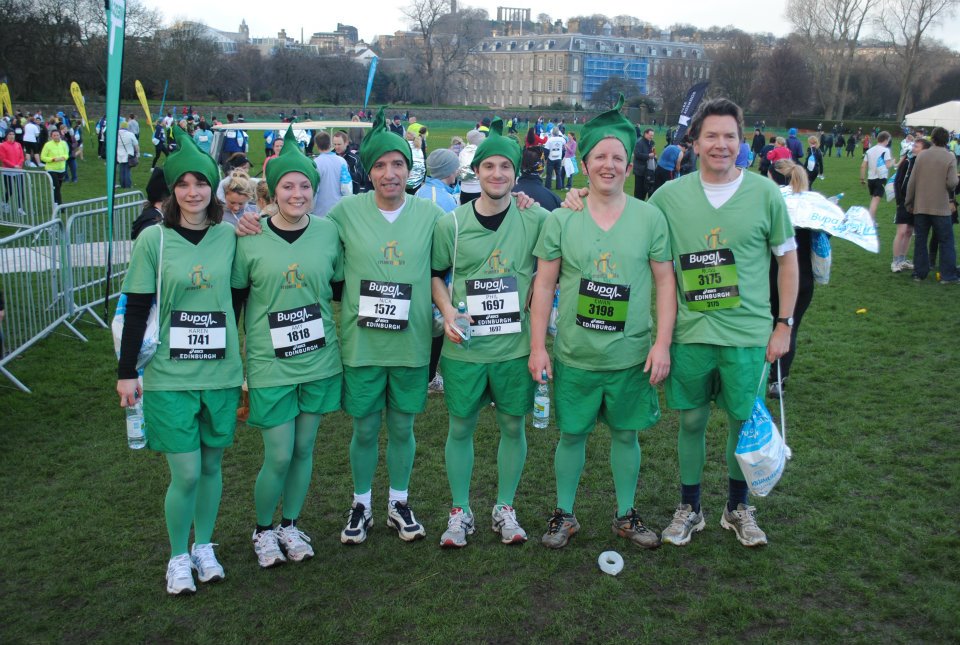
This January, IRRI’s Resource for Life ‘Runner Bean Team’ will be daring the snowy peaks of Edinburgh’s Arthur’s Seat to take part in the BUPA Great Winter Run.

Our cause is Resource for Life.
Nutritious food, water, energy, transport, clothing, household staples; all things that we often take for granted. Not all of us, though. Some of us live with the tough reality of deprivation.
Resource for Life will work with children in areas of deprivation to provide them with the knowledge and understanding of resources, teaching them how to make their own environments serve their needs.
We are building a practical learning programme that will allow children to grow their own food, learn of sustainable energies, recyclable materials and sustainable transport and even learn about opportunities for them in the new green economy.
Any donation you make will help a child to learn and grow through his or her environment. Your money will help to make their world and our world a better place.
To find out more, please visit http://bit.ly/tOUEQ3
To donate, please visit http://bit.ly/sSadJv 
Please stay tuned to the IRRI blog for more updates on our fundraising campaign.

Friday, 21 October 2011

Sustainable Rural Communities Event

FREE Sustainable Rural Communities Event

On Thursday 27 October the Biofuel Business Programme and partners* will be hosting a Sustainable Rural Communities event in Birnam Arts Institute, Dunkeld, PH8 0DS.

This event is being tailored specifically to the farming community, and will feature brief technical overview and case studies of a range of suitable technologies, including Anaerobic Digestion, PV, Wind and MicroHydro.

The event will commence at 10.15am and will run until 13.30 at Birnam Arts Institute in Dunkeld. During the morning, delegates will have the opportunity to hear all speakers, and also meet a range of exhibitors providing advice on technologies, funding and legislation. A detailed programme for the day and exhibitor list will be provided on registration.

To register for this free event, please email bbp@napier.ac.uk or call the team on 0131 455 2217. 

If you would like to exhibit at this event please contact Claire Goncet, c.goncet@napier.ac.uk

Tuesday, 18 October 2011

Woodlands In and Around Towns (WIAT)

The Forestry Commission will potentially be hosting a course based around the management of urban woodlands (details below). Please express your interest to Jim Smith - Jim.Smith@forestry.gsi.gov.uk


Purpose
The purpose of this course is to demonstrate how design can make a positive contribution towards the WIAT objectives of:

·          Creating new woodland.
·          Bringing neglected woodland into active management.
·          Working with people to help them use their local woodland.

Audience

This course has been developed for all those who have responsibilities for the creation and management of woodlands intended for active use by local communities. This includes all those who are involved in the preparation and consultation of such urban woodland management plans.

Content

Over the two days, the course will demonstrate the stages of the design process:

·          Gathering and use of survey information.
·          Understanding the opportunities and constraints of a site.
·          Developing a design concept.

Through that design process key urban woodland subjects will be covered, specifically the contribution of design in:

·          Community engagement.
·          Anti-social behaviour.
·          Woodland access thresholds, pathways and spaces.
·          Use of woodland spaces.
·          Woodland edge.

Outcomes

At the end of the course it is anticipated that you will have an enhanced appreciation of:

·          How the agency of design can optimise the delivery of a quality woodland environment for a local community.

·          How design can contribute towards effective community engagement and help resolve anti-social behaviour.

·          The fundamentals of the design principles and their application in the design process.

·          The location, use and linkages of spaces for people to optimise their woodland experience.

·         The development of an urban woodland design through to the preparation of a concept design.

And overall, increase your capacity and confidence to effectively communicate your ideas and engage creatively with all communities of interest.


Thursday, 15 September 2011

Sigma for Water Partners Meeting

IRRI is to co-host a visit by Europeans from 6 countries as part of the EU InterReg project "Sigma for Water". This project focuses on master planning for the creation and enhancement of wetlands and lakes for the purposes of water quality improvement and flood mitigation. Glasgow & Clyde Valley Green Network Partnership (GCVGNP) will share the hosting as UK project partners. Through the IRRI’s association with GCVGNP, the 2-day visit will include presentations from European visitors and discussion sessions before IRRI/GCVGNP led site visits. The first day 20th September will visit sites relating to Integrated Green Infrastructure while the second day will visit the Gartloch/Gartcosh 7 Lochs Wetland Park site to the north east of Glasgow.

To learn more about Sigma for Water, please visit - http://www.sigmaforwater.org/. To learn more about Glasgow & Clyde Valley Green Network Partnership, please visit - http://www.gcvgreennetwork.gov.uk/

Wednesday, 14 September 2011

Community Energy

The Scottish Government has set ambitious targets of achieving 500 megawatts of community and locally owned renewable energy by 2020. Significant funding and resources have been made available to help achieve the government’s targets. The Community and Renewable Energy Scheme (CARES) loan fund was launched back in February 2011 and aims to provide loans towards the high-risk, pre-planning consent stages of renewable energy projects which have significant community engagement and benefit.  

There is also the Scottish Governments Community Renewable Energy Toolkit which provides information, advice, funding details and next steps to community’s considering what they can benefit from renewable energy projects. 
It is clear that community energy set ups can offer increased community cohesion and confidence which is especially important at a time when many communities, particularly those in rural areas, are experiencing financial hardship.  
IRRI itself has a history of assisting with community renewable energy initiatives through the SMALLEST (Solutions for Microgeneration to Allow Energy Saving Technology) project in which they are lead partner. SMALLEST works specifically with rural communities throughout the Northern Periphery to access micro renewable energy solutions more effectively.


Moffat CAN
Moffat CAN (Carbon Approaching Neutral) are a community company and charity situated in the rolling hills of Dumfries & Galloway in South West Scotland. Here the community has come together to launch a multifaceted community group, working to reduce the towns carbon footprint. Their activities range from recycling and waste food collections to composting and food production. Moffat CAN has also invested in a closed loop aquaponics system where fish and plants work in harmony - the fish produce waste which provides the nutrients for the plants and the plants soak up the nutrients leaving clean, fresh water for the fish. Even more impressively the water in the tanks is heated by a combination of solar thermal panels and ground source heating. The set-up of the aquaponics system was assisted by IRRI through the SMALLEST project.
The Moffat CAN story goes from strength to strength - they were recently awarded funding from the Jubilee People’s Millions Award. This will allow them to launch their new ‘Tasty Waste’ project and continue their brilliant work, creating more jobs and doing their bit to safe guard the environment for the future.

For more information on Moffat CAN, please see their website - http://www.moffatcan.org/


            Launch of Renewable Energy Mayo
This September will see the launch of Renewable Energy Mayo (REM). REM is a community energy set-up created through a partnership of Mayo County Council and IRRI.  
County Mayo
A local team has been assembled to take REM forward. Shane Mulchrone; Community Development Officer, Michael Prenty; Energy Advisor and Áine Carr; Energy Development Officer, will work to offer guidance and advice to householders, businesses and community groups throughout Mayo who want to take a more sustainable approach by adopting renewable energy systems. This will contribute towards efforts to tackle climate change and also help alleviate fuel poverty and create jobs. 
  
Interested community groups are invited to attend the launch of Renewable Energy Mayo on the 28th of September at the McWilliam Park Hotel, Claremorris from 9am until 1pm.
If your community is interested in attending the launch or investigating renewable energy solutions, please contact Shane Mulchrone on 087 -6689467 or via email at shane.mulchrone@irri.org.uk. Coming soon, you will also be able to find further information on Renewable Energy Mayo at www.renewableenergymayo.com.